On 15 August 2025, we made this submission to the Senate Legal and Constitutional Affairs Committee on the Whistleblower Protection Authority Bill 2025. As discussed in this article by Nigel Carney, submissions such as ours which were more critical of the government were excluded from the senate's published submissions, thereby creating a public record that seemed to be largely in favour of the proposed changes, with little pressing need to change anything in regards to whistleblowers.
As seen in our submission though, there is a history of mistreating whistleblowers and brushing things aside when it becomes clear that whistleblowers have been let down.
Click here for a pdf version as originally submitted to the enquiry.
Submission to the Senate Legal and Constitutional Affairs Committee on the Whistleblower Protection Authority Bill 2025
Foreword
Fusion thanks the Senate Legal and Constitutional Affairs Legislation Committee for the opportunity to make a submission about how whistleblowers should be better protected in Australia.
FUSION | Planet Rescue | Whistleblower Protection | Innovation represents over 1,700 members who believe in technological advancement, climate action and civil liberties.
This submission has mainly been written by Owen Miller. Mr Miller graduated in 2012 from the University of Sydney, studying BSc (Computer Science) and BEng (Mechatronics) (Hons I). His career as a software engineer has included roles at Amazon, at the Defence Science & Research Organisation (DSTO) and at startups in Sydney and New York.
Introduction
Australia’s score is improving, but we are still short of our highs when it comes to the Corruption Perceptions Index. Considering Australians’ purported love of a fair go and our reliance on free-market economics, this ongoing corruption is eroding our national identity and seeing swathes of our society join in the game of exploiting each other and exploiting our common wealth.
The whole Robodebt program from 2016 was motivated by people cheating the welfare system, and yet rampant welfare fraud and tax fraud continues 9 years later. The NDIS budget continues blowing out to staggering amounts, and whether or not there’s any fraud there, the widespread public perception is that there is.
Successive governments have earned Australia a reputation for corruption, which was almost resolved by the promise of a National Anti-Corruption Commission, but then the public saw how this commission actually panned out.
Sorting out this widespread distrust of the government is an urgent matter of national security − just as the Arab Spring spread from one dictatorship to the next, the imminent breakdown of civil order in the US will very readily spread to civil unrest here, if the popular narrative is one of institutions no longer being trustworthy.
To address this proposed whistleblowing bill, what now follows are some summary recommendations, followed by a deeper justification for them.
Recommendations for the Whistleblower Protection Authority
- Grants should be issued for the documenting of whistleblowing case studies, to guide a well-informed approach to creating this new authority.
- The Whistleblower Protection Authority should be merged with the Ombudsman and the National Anti-Corruption Commission
- The authority should report directly to parliament, not to a minister.
- The authority’s staff should have their compensation set by the Remuneration Tribunal.
- Acting in good faith should not grant immunity to staff of the new authority.
Broader Recommendations
- All government-funded software should be open-source.
- Australia should implement a Universal Basic Income, perhaps in the way advocated by Basic Income Australia, on the understanding that it will eliminate welfare traps and reduce the potential for welfare fraud.
- Australia should stop bailing out companies without actually getting any equity. Such a practice is inherently prone to corruption.
- To ensure unbiased truth, Australia should fund a broader (potentially foreign) group of media organisations, not just the ABC and SBS. They have not been shining a sufficiently bright light on the government, sometimes because they’re scared of consequences: see the Antoinette Lattouf saga.
- Australia should steer away from censorship bodies, especially the “Ministry of Truth”, and should instead fund viable open-source competitors to existing public squares. If people cannot receive trustworthy information, they cannot verify what the government is telling them.
Explanations
1. Whistleblowing Case Studies
There is not much literature about how whistleblowing cases have been handled, and it would be a shame if the committee had to blindly create this new authority.
There are academics such as A J Brown with backgrounds in public integrity who could contribute to the investigation and documentation of case studies of how whistleblowing cases have been handled in the real world.
Issuing a few grants to academics could make a massive impact to this new authority.
In the immediate term though, we would like to provide two cases studies here, with further detail in the appendices.
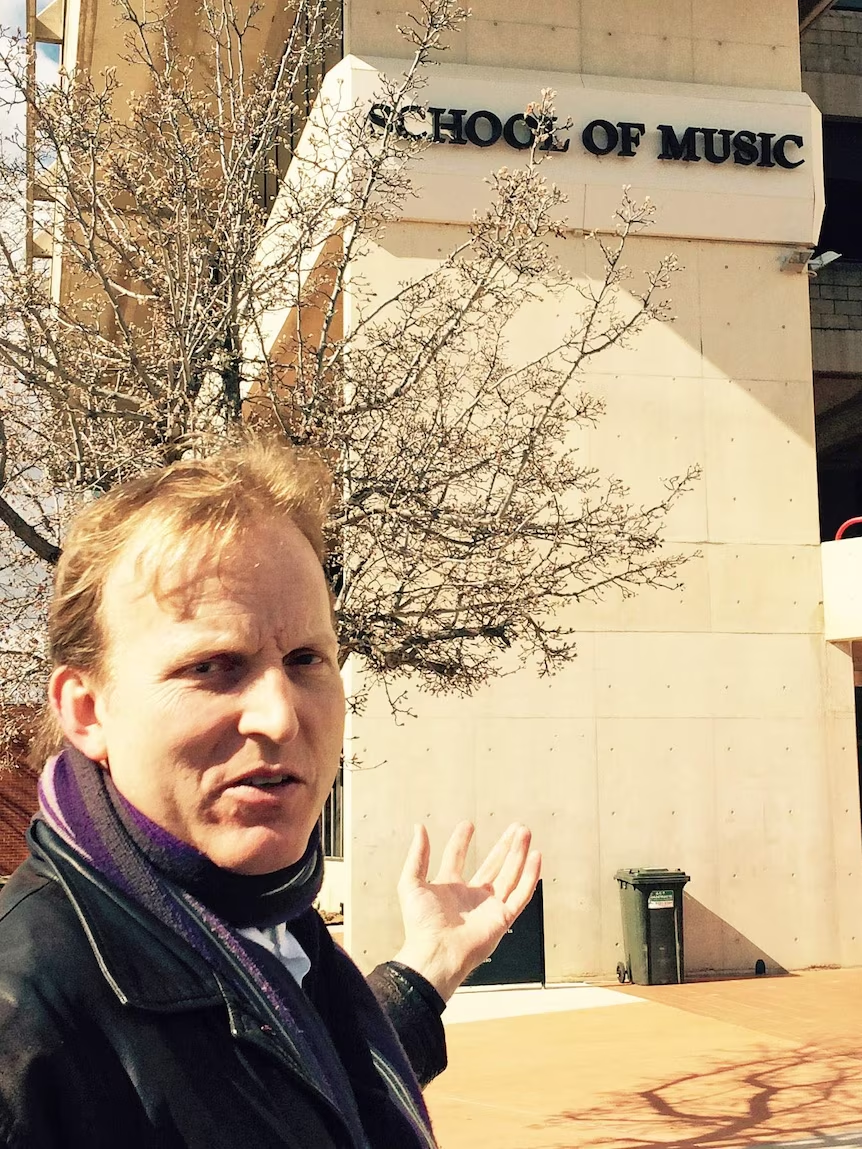
ANU School of Music
Professor Peter Tregear (head of the School of Music at ANU) publicly disclosed to the Ombudsman that 11 senior ANU employees were guilty of corruption and maladministration. ANU then hired an external investigator, who publicly gave character assessments of Professor Tregear as "untrainable" and that "he is a liar [and] a manipulator". Professor Tregear felt this had no place in a public interest disclosure report, and raised it with the Ombudsman. Cassandra Hodzic (with the Ombudsman) started investigating and requested various information from ANU, but they kept ignoring her, so she closed the investigation. The Ombudsman had the power to compel ANU to give them the information, but Cassandra Hodzic just didn't invoke this power.
Registrars at the Federal Court
There was an allegation of unlawful recruitment / promotion of registrars in the Federal Court. Kate McMullan carried out an investigation, then acting Ombudsman Penelope McKay investigated the inadequacy of Kate McMullan's investigation. Mark Anstey (acting assistant director in the Public Interest Disclosure Team) killed Penny McKay's investigation on the grounds (disputed by observers as being invalid) that the Public Interest Disclosure Act does not provide a mechanism for a finalised Public Interest Disclosure investigation to be re-opened, so the Ombudsman cannot take any action that would cause an agency to re-open an investigation.

2. Merging Government Bodies
The scope of the Ombudsman has grown over the years to be essentially a complaints department for the government. So if someone knows something went wrong, they should call the Ombudsman. But if they also know a bit of backstory about why something went wrong, then they’re essentially a whistleblower, so do they contact the Ombudsman or the Whistleblower Protection Authority?
If they know that some corruption went on, then they could similarly report the issue to the NACC. Is it intentional that whistleblowers are meant to be able to shop around?
There’s also the issue that each department could readily pass the buck elsewhere.
Finally, let’s consider it from a different whistleblower’s perspective: if you get the type of everyday Aussie battler you see on A Current Affair, complaining that something’s not right within some particular government body, then can they really be expected to know the nuances of where they’re supposed to report this issue?
What’s really needed is an Office of Integrity.
Just like the NACC, it could be proactive, but Fusion feels it could be extended further to support research and development for tools and practices that allow transparency and scrutiny throughout Australia and the rest of the world.
Tools for open-source intelligence would be an obvious possibility here, as well as encryption tools and blockchain tools.
3. Reporting to Parliament
It’s easy to imagine a whistleblower reporting an issue that would be politically damaging to the minister responsible for this new authority. Whether or not the minister would actually exert pressure on the whistleblowing authority, the staff may just act this way because they don’t want to find out what the consequences would be.
Furthermore, what would be going through the whistleblower’s mind when they’re thinking of reporting an issue that would be politically damaging to the responsible minister? It doesn’t matter how honourable this minister is; the situation is not ideal and the authority needs as much independence as possible: it must report directly to parliament.
4. Remuneration of Staff
Looking at the Public Service Gazette from 9 May 2025, there is a job at the Office of the Commonwealth Ombudsman: an assessment officer. It’s mentioned here that the role is ideally suited to recent graduates in law, criminology or international relations. The classification for the role is, in accordance with the Public Service Classification Rules 2000 (Cth), set at APS 4, making the remuneration $76,351.
This might seem fine, if the job-seeker doesn’t read in the Australian Financial Review that law graduates in Sydney are “about to crack a salary record” − the nation’s eight major law firms will pay all Sydney-based graduates at least $100,000.
Since the positions can’t simply be re-classified as APS 5 or EL 1, the solution seems to be to take the approach of the courts and use the Remuneration Tribunal. It’s our view that this tribunal should be used instead of the APS remuneration system for a lot more government employees too.
5. Immunity from Litigation
The proposed law grants near-total legal immunity to staff of the new Whistleblower Protection Authority (WPA). Stipulating that whistleblowers can only sue WPA employees if they acted in "bad faith" is a very high legal bar that almost never applies, even in cases of serious mistakes or unlawful decisions.
Even if a WPA investigator misinterprets the law and dismisses a valid whistleblower case, the whistleblower cannot challenge it unless they can also show that this misinterpretation was deliberate dishonesty or malice.
This proposed immunity is very similar to section 78 of the Public Interest Disclosure Act, but notice there that a clause is carved out to protect those rights conferred by the Administrative Decisions (Judicial Review) Act so that a decision can be challenged merely for being incorrect.
Some worry that lawsuits will unfairly target individual employees, but there are some points to note:
- The government (not the employee) pays any compensation.
- The lawsuit is about fixing the decision, not punishing the person.
There was an explanatory memorandum for the whistleblowing bill, but all it did was restate the same clause, it did not actually explain the reasoning:
Clause 64: Immunity from civil proceedings for staff members of the Authority and persons assisting
- This clause exempts a staff member of the Authority from liability in civil proceedings in relation to an act done, or omitted to be done, in good faith and in accordance with the Act. This immunity extends to persons assisting a staff member at the request of the Commissioner.
6. Open-Source Software
It has previously been recommended by Fusion that all government-funded software should be open-source. One way of arriving at this conclusion is the fact that you’d make the most of the spending by opening up the end product to a broader group of people to use this software.
Then there’s the fact that citizens may not just want to use this software, they might want to participate in its maintenance and improvement, just like the gov0 movement in Taiwan. If passionate, capable software engineers want to improve your government software for free, why on earth would you stop them?
What kind of backwards country would stop its best people from helping?
But then there’s the 3rd point for how open-source software fits in: it adds transparency to government operations. If people could see the Robodebt algorithm for instance, they could’ve spotted that it’s flawed, and maybe they could’ve written something smarter.
But even if they didn’t, if the public get the sense that the government is overly secretive, then they’re prone to losing trust and in turn, to overthrowing the government.
We mentioned in the introduction that civil unrest in the US is likely to spread here − just look how readily we imported the protests originally opposed to police violence against African Americans. Australian protestors deemed Aboriginal Australians to be sufficiently similar victims, and Australian police to be sufficiently similar perpetrators, leading to tens of thousands of protestors marching from Town Hall in Sydney.
Even the “Kony 2012” movement spread from the US to Australia, complete with signs of the Democrat donkey and the Republican elephant. Many Australians wouldn’t have known what the signs meant, but they were still prepared to endorse a request for the US to hunt down an African warlord.
If the Australian government is not ready to defend against protests about the country being run by an opaque cabal who doesn’t have citizens’ best interests at heart, then it really only has itself to blame.
7. Universal Basic Income
In The Virtues of Being a Dole-Bludger, it has been argued that by forcing people into jobs, they’re inevitably forced into immoral jobs. A stronger safety net from a Universal Basic Income would therefore allow more people to resign on moral grounds − exactly the sort of phenomenon that leads to whistleblowers.
Whistleblowers (or moral objectioners more broadly) need to feel that they’re not going to be left destitute if they suffer retaliation.
You could create hundreds of extra laws and appoint an army of civil servants to enforce such protections, or you could just pay all citizens enough money for a basic life, and most of the retaliation problem would be resolved.Submission on the Whistleblower Protection Authority Bill 2025
8. Company Grants
It’s puzzling that it’s still a common phenomenon for Australian governments to give large grants to companies with no equity in return.
The promise of jobs just isn’t good enough, and understandably creates suspicions of corruption.
It doesn’t make sense to create a golden opportunity for corruption, then wait for the inevitable to happen, then create a convoluted system for protecting the whistleblowers who will hopefully come forward.
Why not prevent the corruption from ever having a chance? If the government still desires to play an active role in assisting Australian companies, then it can take an approach more like France or China. It might also seek to provide industry-wide, company-neutral approaches like funding research & development through the CSIRO and universities for the use of all Australian companies.
9. Media Funding
Through incidents such as the Antoinette Lattouf saga, the ABC has shown that it just can’t be trusted as much as Australians have hoped.
There have also been incidents where ABC election coverage has not just downplayed the potential of minor parties − they’ve framed it as if we weren’t in the election at all!
When organisations such as Al Jazeera manage to become reputable sources of news and build up a following, why not chip in for their funding and help ensure their continued impartial coverage of Australian events, amongst other stories? Why put all our eggs in one or two baskets?
As the ABC and SBS go through inevitable lulls in quality and objectiveness, if we were funding other news sources too, then we could expect that Australian news could still receive professional treatment.
We could also assist hyper-local news outlets such as Brunswick Voice.
If whistleblowers are going to raise an issue, they need somewhere to actually tell the story, and many whistleblowers prefer going to journalists rather than going to a government department who may participate in a coverup.
10. Avoiding Censorship
Besides leaking wrongdoing to journalists or governments, whistleblowers also like to leak secrets at the public square.
By banning citizens under 16 years old, there’s a presumption that such citizens have nothing important to say, and the inevitable uploading of passports will diminish trust amongst other users who suspect that the government has too much involvement in the public square. Especially if they’re blowing the whistle on government practices, people are going to be suspicious that the government will get involved in a coverup.
If people are free to chat openly, they can explore ideas with each other. Sure, some of these ideas will be conspiracy theories, but if the theory doesn’t end up having any holes in it, then just from public knowledge, citizens could end up inferring a lot about the affairs of secretive organisations. Such is the basis of open-source intelligence.
With open-source intelligence, we don’t need whistleblowers revealing secrets from the inside; we can rely on the public to uncover what’s going on.
But if making a mistake in your investigative collaboration means being banned forever after, then the public square gets shut down from any open-source intelligence; any political discourse; and any conversations of any intellectual value.
By censoring the public square, you end up turning it into a place for vapid conversations, interpersonal drama, and inevitably, bullying.
It still remains Fusion’s view that rather than trying to censor public squares, the Australian government should make it easier to uncover the truth.
Conclusion
Fusion does not recommend passing the bill in its current form.
We have provided some specific advice about how to improve the proposed Whistleblower Protection Authority, although the best protection for whistleblowers is to make them unnecessary. By moving towards a more transparent government, we will ensure greater prosperity and greater trust in institutions. This is needed with extreme urgency, if Australia is to weather the unfolding catastrophes in fellow democracies.
Appendix
The following pages provide further detail into the two incidents mentioned previously:
- ANU School of Music
- Registrars at Federal Court
Click here for the appendix (pdf) 🖹
Further Reading
- Fusion's Whistleblower Policy
- Senate submissions page showing 16 of 31 submissions were "received in confidence" (ie, suppressed)
- Professor Peter Tregear's suppressed senate submission
- Senate scrutiny digest number 3 of 2025
- ABC coverage of Professor Tregear's whistleblower disclosure
- Daily Mail coverage of Professor Tregear's whistleblower disclosure
- SMH coverage of Professor Tregear's whistleblower disclosure
- The Australian's coverage of Professor Tregear's whistleblower disclosure
- Sydney Criminal Lawyers: Whistleblowers Remain Unprotected